Cataract surgery: clearer sight, when the time is right
A cataract is a cloudy patch in the natural lens inside your eye. It usually develops slowly, most often with age, and no drop, tablet or diet can clear it. When it begins to get in the way of reading, cooking, driving or recognising faces, a short operation replaces the cloudy lens with a clear artificial one. [R1][R2]
Written by Dr. Praveen Kumar, MBBS, DO, DNB, FRCS (Glasgow)Medically reviewed by Dr. B. Anil Kumar, MBBS, MS, DOLast reviewed 24 September 2026
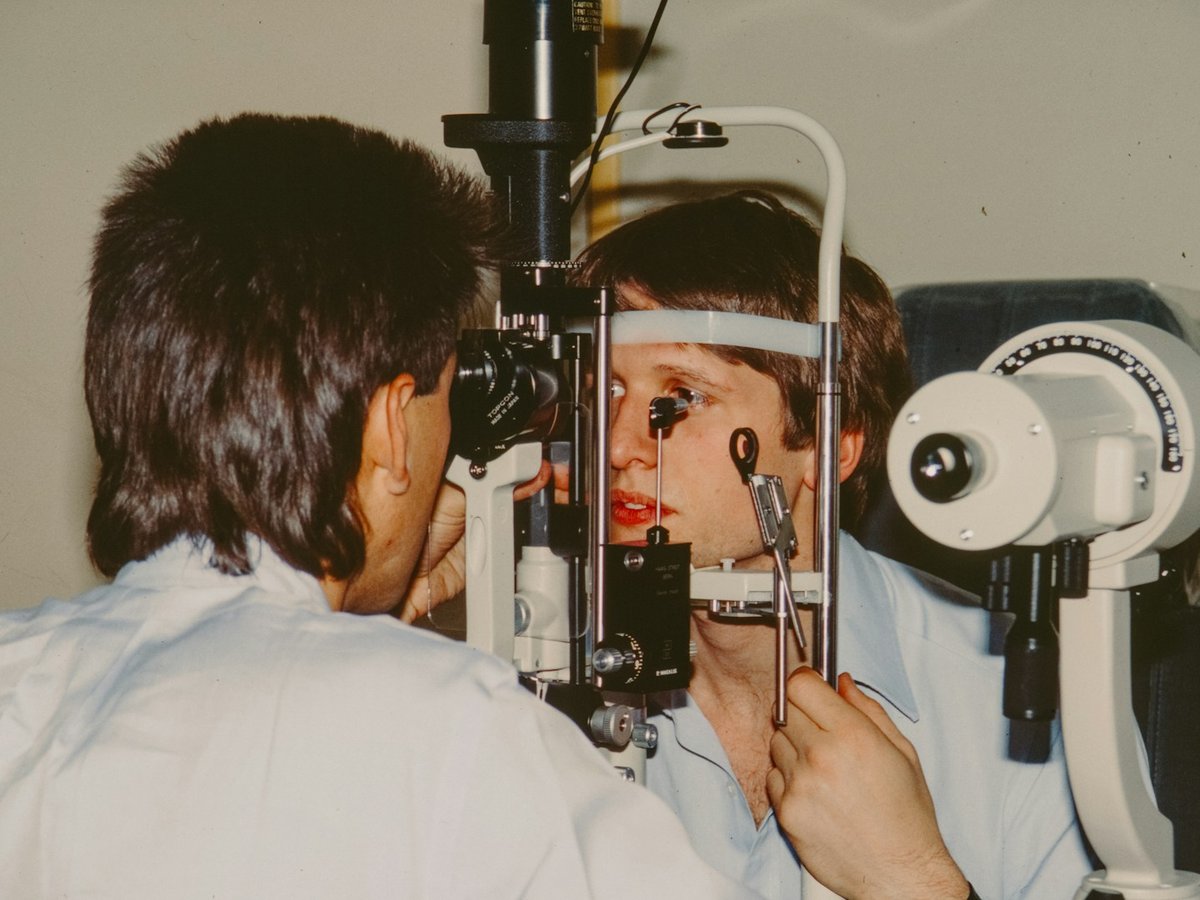
Ophthalmic slit lamp evaluation at Dr. Anil Kumar's Eye Hospital
Anaesthesia
Numbing drops or a local injection; you stay awake
Time at the hospital
About 2–3 hours on the day
Going home
The same day
Final glasses
Usually about 4–8 weeks later
On this page (quick navigation)
What a cataract is
Behind the coloured part of your eye sits a lens, normally as clear as glass. It focuses light onto the retina, the light-sensitive layer at the back of the eye. With age, the proteins in the lens slowly change, and it becomes cloudy, yellowish or hard. Light is scattered instead of focused, and vision becomes dim or blurred — many patients describe it as looking through a dusty window. [R1]
Age is the most common cause. Diabetes, smoking, an old eye injury, inflammation inside the eye (uveitis), long-term use of steroid medicines and strong sun exposure can make a cataract appear earlier. [R1] Some babies are born with a cataract or develop one in childhood; that needs prompt care from a paediatric eye specialist — see Children's eyes & squint.
A cataract cannot spread from one eye to the other, although both eyes are often affected at different speeds.
Signs that a cataract may be affecting you
Early cataracts often cause no symptoms at all. As they progress, you may notice: [R1]
Vision that is blurred, cloudy or dim, even after getting a new pair of glasses
Glare from headlights, sunlight or tube lights
Difficulty seeing at night, or needing significantly brighter light to read
Colours that look faded, muted or yellowish
Double or “ghost” images in one eye
Frequent changes in your optical glasses prescription
These signs can have other causes too. Only an eye examination with dilating drops can tell whether a cataract is responsible — and whether another condition such as glaucoma or diabetic eye disease is also present. Read: 7 cataract symptoms explained →
Do you need surgery now?
Not always. In the early stages, a new glasses prescription, brighter reading light and anti-glare lenses may be enough. Surgery is usually advised when the cataract makes everyday tasks difficult — for example reading, cooking, driving, working or walking safely outside at dusk. [R1][R2]
You do not need to wait for a cataract to “ripen”. Modern surgery works well on early cataracts. Leaving a cataract until it is very dense can make the operation technically harder and recovery slower, so we will tell you honestly if we think yours is approaching that point. Equally, if your vision still meets your needs, it is reasonable to wait and review it again.
Surgery can be done safely in any season. Summer heat or the monsoon does not change the surgical outcome, as long as you use your prescribed drops and keep the eye clean.
Your surgeon will also check for other conditions — diabetic changes in the retina, glaucoma, or corneal problems — that can limit how much your vision improves, and will explain this carefully before you decide.
How the operation is done
Cataract surgery removes the cloudy natural lens and places a clear artificial lens (an intraocular lens, or IOL) in exactly the same position. You are usually awake. Numbing drops or a local anaesthetic make the eye comfortable; you may see light and movement but not the instruments. [R2] Your surgeon will choose the anaesthetic that suits your eye.
Figure: The natural lens sits just behind the coloured iris. In cataract surgery it is replaced by a clear artificial lens (IOL) in exactly the same position.
Phacoemulsification (phaco)
The surgeon makes a tiny opening at the edge of the cornea, softens the cloudy lens with ultrasound energy and gently removes it, then unfolds a foldable intraocular lens inside the eye. The opening is usually self-sealing, so stitches are not normally needed. This is the technique we use most often.
Micro-incision cataract surgery (MICS)
MICS is phacoemulsification through an even smaller opening, about 2.2–2.4 mm. A smaller opening means minimal disruption to the natural shape of the cornea and faster visual settling in suitable eyes.
Small-incision cataract surgery (SICS)
In SICS, the lens is removed in one piece through a slightly longer, self-sealing tunnel in the white of the eye (sclera). It is a well-established, reliable technique and is sometimes the safer choice for very dense, hypermature or hard cataracts. Your surgeon will explain which approach is recommended for your eye and why.
Choosing your lens
The lens you choose decides how much you will rely on glasses afterwards. We will measure your eye carefully (optical biometry) and discuss your daily work, hobbies and budget before recommending one.
Scroll table horizontally to compare all options →
Types of lens implant (Intraocular Lenses)
Lens type
What it does
Glasses afterwards
Worth knowing
Monofocal
Clear vision at one set distance, usually far
Reading glasses needed
Most widely used; excellent clarity of vision
Toric
Monofocal lens that also corrects astigmatism (cylindrical power)
Reading glasses needed
Suits eyes with significant pre-existing astigmatism
Multifocal or trifocal
Several focus zones for far, intermediate and near vision
Often not needed for most everyday tasks
Some people notice haloes around lights at night; not suitable for every eye
Extended depth of focus (EDOF)
A continuous focus range from far to intermediate (arm’s length)
Glasses may be needed for fine print reading
Fewer night-time haloes than multifocal lenses for many patients
Some eyes are not suitable for multifocal lenses — for example eyes with retinal disease, macular degeneration, or advanced glaucoma. Your surgeon will tell you if that applies to you.
Before, during and after surgery
Tests before surgery
A full dilated eye examination with drops
Precise optical measurements of your eye length and corneal curvature to calculate the ideal lens power (biometry)
Eye pressure check and, when indicated, a retinal optical coherence tomography scan (OCT)
General health assessment — blood sugar (HbA1c/glucose), blood pressure and current medications
Note: Please bring all your current medicine strips or a written list, including any blood thinners or diabetes medicines.
On the day
Eat a light meal unless told otherwise, take your usual medicines unless your doctor has asked you to pause any, and come accompanied by one adult who can take you home. Plan for a few hours at the hospital: registration, drops, the operation itself and a short rest. You will go home the same day with a protective eye shield and an eye drop kit. [R2]
The first weeks at home
Use your drops exactly as prescribed; bring them to every review visit.
Wear the protective shield while sleeping for as long as advised.
Reading, watching television and using mobile phones are usually fine within a few hours. [R3]
Light walking is fine from the next day. Avoid bending with your head below your waist for the first two days. [R3]
Keep water, soap and dust out of the eye while bathing; ask us before washing your hair.
Avoid swimming and ponds for about two weeks. [R3]
Ask your doctor before driving; the answer depends on your vision in both eyes. [R3]
Most people are fully healed by about eight weeks, when a final glasses prescription is usually given. [R2]
Your first review is usually scheduled for the next day. Please bring your drops and your discharge card.
Risks, and how we reduce them
Cataract surgery is one of the most frequently performed and safest operations worldwide, and the vast majority of patients achieve significantly clearer vision afterwards. [R1] Like any surgery it carries potential risks, which your surgeon will discuss openly with you: [R2]
Infection, inflammation or bleeding inside the eye
A temporary rise in intraocular eye pressure
Retinal detachment
Vision that is not as sharp as hoped, sometimes due to underlying retinal conditions
Clouding of the thin membrane behind the new lens months or years later (a “secondary cataract”), which is easily cleared with a painless 2-minute outpatient YAG laser procedure [R2]
We reduce these risks through rigorous pre-operative general health reviews, sterile operating-theatre protocols with laminar airflow, and structured post-operative follow-up visits.
After surgery: call us straight away if you notice
Call the hospital or come in immediately if, after surgery, you experience any of the following: [R2]
Vision that suddenly gets worse instead of steadily better
Pain that prescribed painkillers do not relieve
Eye redness that is noticeably increasing rather than fading
A sudden shower of new floaters, flashes of light, or a dark curtain across your vision
Cataract operations are performed by Dr. Praveen Kumar and Dr. B. Anil Kumar. Dr. R. K. Rasmi Praveen operates on children with congenital and developmental cataracts.
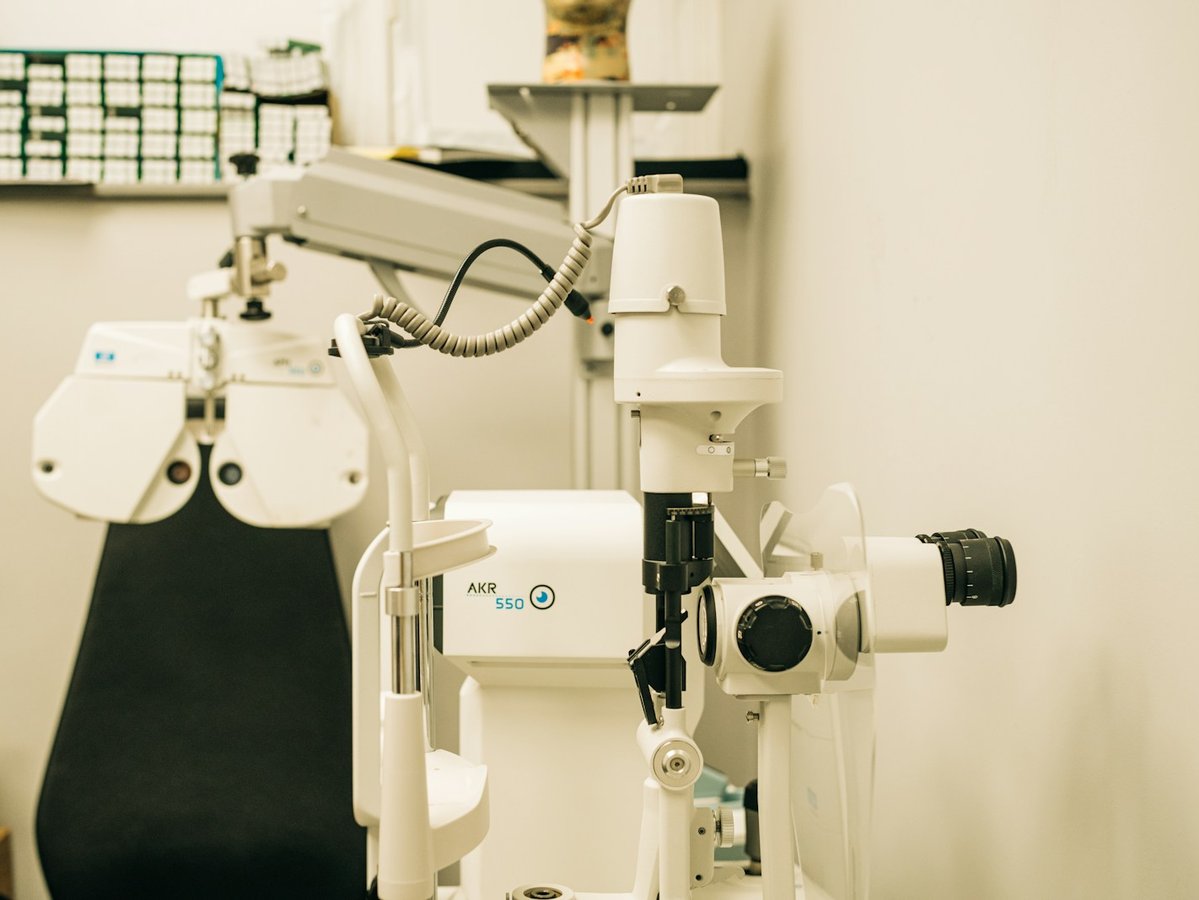
Our surgical centres are equipped with high-precision ophthalmic operating microscopes, advanced phacoemulsification systems with active fluidics, and sterile positive-pressure theatre airflow to maintain the highest clinical standards.
Dedicated surgical theatre operating microscope at Dr. Anil Kumar's Eye Hospital
Cost, insurance and cashless treatment
The cost depends mainly on the lens you choose, the surgical technique your eye needs, and whether any other eye condition requires care at the same time. After your comprehensive examination, we will give you a clear, written estimate for each lens option so you can decide comfortably at home without pressure.
Many health-insurance policies — including corporate and employer policies that cover parents — provide coverage for cataract surgery. Bring your policy card or digital e-card to your visit and our front desk insurance coordinator will verify cashless pre-authorisation.
Insurers, TPAs and schemes we work with: Star Health, ICICI Lombard, Medi Assist, Paramount TPA, FHPL, MDIndia, and Tamil Nadu Chief Minister's Comprehensive Health Insurance Scheme (CMCHIS)
Questions patients ask
Can a cataract be removed with drops or medicine?
No. No drop, tablet or diet has been shown to clear a cataract. New glasses can help for a while in the early stages; once the cataract affects your daily life, surgery is the only treatment. [R1]
Does cataract surgery hurt?
Most people feel little or no pain. The eye is numbed, and you may feel light pressure or see bright lights. The eye may feel gritty or watery for a few days afterwards. [R2]
Will I need glasses after surgery?
That depends on the lens. With a monofocal lens most people need reading glasses. Toric, multifocal, trifocal and EDOF lenses can reduce your need for glasses; your surgeon will tell you what to realistically expect for your eyes.
Can both eyes be operated on the same day?
We usually operate on one eye at a time, a few days to weeks apart, so the first eye can settle and its result can guide the second. Your surgeon will advise on timing.
I have diabetes. Can I have cataract surgery?
Yes, in most cases. Your blood sugar should be reasonably controlled, and we examine the retina carefully before and after surgery because diabetes can affect how well the eye heals. [R11]
When can I go back to work, cooking or the temple?
Desk work and light housework are usually possible within a few days, but avoid smoke, dust and heat from the stove and lamps until we review the eye. Your surgeon will give you dates at the first review. [R3]
Can I travel after surgery?
Yes. Travel is fine as long as you use your drops on time and keep your review appointments. If you live far away, tell us — we can plan reviews at the branch nearest to you.
Is there any food I must avoid?
No special diet is needed after cataract surgery. Keep following any diet your doctor has advised for diabetes or blood pressure.
What is a secondary cataract?
Months or years later, the thin membrane that holds the new lens can become hazy and blur vision again. A short YAG laser treatment in the clinic clears it; no operation is needed. [R2]